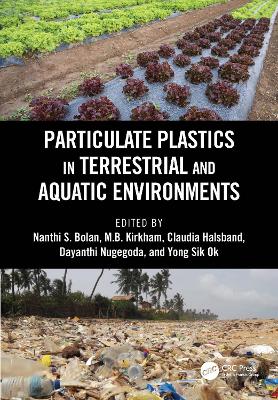
Particulate Plastics in Terrestrial and Aquatic Environments
 -10%
portes grátis
-10%
portes grátis
Particulate Plastics in Terrestrial and Aquatic Environments
Ok, Yong Sik; Kirkham, M.B.; Bolan, Nanthi S.; Nugegoda, Dayanthi; Halsband, Claudia
Taylor & Francis Ltd
07/2020
442
Dura
Inglês
9781138543928
15 a 20 dias
1292
Descrição não disponível.
Section I: Sources of particulate plastics in the environment. 1 Sources of particulate plastics in terrestrial ecosystems. 2 Particulate plastics from agriculture. 3 Polyacrylamide (PAM) as a source of particulate plastics in the terrestrial environment. 4 Analytical methods for particulate plastics in soil and water. Section II: Distribution and characteristics of particulate plastics. 5 An introduction to the chemistry and manufacture of plastics. 6 Interaction of dissolved organic matter with particulate plastics. 7 Characteristics of particulate plastics in terrestrial ecosystems. 8 Facilitated transport of zinc on plastic colloids throuth soil columns. 9 Microbial Plastisphere: Microbial habitation of particulate plastics in terrestrial and aquatic environments. 10 Aggregation behavior of particulate plastics and its implications. Section III: Ecotoxicity of particulate plastics. 11 Environmentally toxic components of plastic manufacture. 12 Particulate plastics as vectors of heavy metal(loid)s. 13 Water relations and cadmium uptake of wheat grown in soil with particulate plastics. 14 Microplastics as vectors of chemicals and microorganisms in the environment. 15 Ecological impacts of particulate plastics in marine ecosystems. 16 Sub-lethal responses to microplastic ingestion in invertebrates: Toward a mechanistic understanding using energy flux. 17 Particulate plastics and human health. Section IV: Case studies of particulate plastics in the environment. 18 Status of particulate marine plastics in Sri Lanka: Research gaps and policy needs. 19 Case studies of particulate plastic distribution and ecotoxicity in Japan. 20 Particulate plastic distribution and ecotoxicity in marine ecosystems and a case study in Thailand. 21 The current status of plastics: A New Zealand perspective. 22 Plastic food for fledgling short-tailed shearwaters (Ardenna tenuirostris): A case study. Section V: Management of particulate plastics. 23 Management of particulate plastic waste input to terrestrial and aquatic environments. 24 Evaluation and mitigation of the environmental impact of synthetic microfibers. 25 Biodegradable bioplastics: A silver bullet to plastic pollution?
Este título pertence ao(s) assunto(s) indicados(s). Para ver outros títulos clique no assunto desejado.
environmental toxicology;microplastic ecotoxicity;synthetic polymer analysis;soil contamination research;aquatic pollution studies;advanced waste management;particulate plastic risk assessment
Section I: Sources of particulate plastics in the environment. 1 Sources of particulate plastics in terrestrial ecosystems. 2 Particulate plastics from agriculture. 3 Polyacrylamide (PAM) as a source of particulate plastics in the terrestrial environment. 4 Analytical methods for particulate plastics in soil and water. Section II: Distribution and characteristics of particulate plastics. 5 An introduction to the chemistry and manufacture of plastics. 6 Interaction of dissolved organic matter with particulate plastics. 7 Characteristics of particulate plastics in terrestrial ecosystems. 8 Facilitated transport of zinc on plastic colloids throuth soil columns. 9 Microbial Plastisphere: Microbial habitation of particulate plastics in terrestrial and aquatic environments. 10 Aggregation behavior of particulate plastics and its implications. Section III: Ecotoxicity of particulate plastics. 11 Environmentally toxic components of plastic manufacture. 12 Particulate plastics as vectors of heavy metal(loid)s. 13 Water relations and cadmium uptake of wheat grown in soil with particulate plastics. 14 Microplastics as vectors of chemicals and microorganisms in the environment. 15 Ecological impacts of particulate plastics in marine ecosystems. 16 Sub-lethal responses to microplastic ingestion in invertebrates: Toward a mechanistic understanding using energy flux. 17 Particulate plastics and human health. Section IV: Case studies of particulate plastics in the environment. 18 Status of particulate marine plastics in Sri Lanka: Research gaps and policy needs. 19 Case studies of particulate plastic distribution and ecotoxicity in Japan. 20 Particulate plastic distribution and ecotoxicity in marine ecosystems and a case study in Thailand. 21 The current status of plastics: A New Zealand perspective. 22 Plastic food for fledgling short-tailed shearwaters (Ardenna tenuirostris): A case study. Section V: Management of particulate plastics. 23 Management of particulate plastic waste input to terrestrial and aquatic environments. 24 Evaluation and mitigation of the environmental impact of synthetic microfibers. 25 Biodegradable bioplastics: A silver bullet to plastic pollution?
Este título pertence ao(s) assunto(s) indicados(s). Para ver outros títulos clique no assunto desejado.