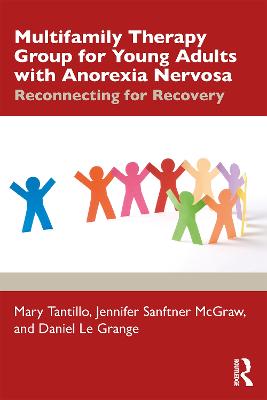
Multifamily Therapy Group for Young Adults with Anorexia Nervosa
 -10%
portes grátis
-10%
portes grátis
Multifamily Therapy Group for Young Adults with Anorexia Nervosa
Reconnecting for Recovery
Sanftner McGraw, Jennifer L.; Tantillo, Mary; Le Grange, Daniel
Taylor & Francis Ltd
11/2020
298
Dura
Inglês
9781138624894
15 a 20 dias
453
Descrição não disponível.
Chapter 1: Reconnecting for Recovery (R4R): A Relational/Motivational Multifamily Therapy Group for Young Adults with Anorexia Nervosa; Chapter 2: The Promise of Multifamily Therapy Group for Young Adults with Anorexia Nervosa; Chapter 3: Development of the Reconnecting for Recovery (R4R) MFTG approach and this Manual; Chapter 4: Getting Ready: Group Structure, Co-Facilitation, Recruitment, and Initial Phone Screening; Chapter 5: Session 1: Engaging and Evaluating Young Adults with Anorexia Nervosa and Their Families: Assessment, Joining and Orientation; Chapter 6: Session 2: Engaging and Evaluating Young Adults with Anorexia Nervosa and Their Families: Assessment, Joining and Orientation (continued);Chapter 7: Session 3: Anorexia Nervosa: A Disease of Disconnection - Introduction, recovery process, motivational interviewing principles, and the spiral of change; Chapter 8: Session 4: Anorexia Nervosa: A Disease of Disconnection - Introduction, recovery process, motivational interviewing principles, and the spiral of change (continued); Chapter 9: Session 5: Biopsychosocial Factors for Anorexia Nervosa & Co-morbidity; Chapter 10: Session 6: Biopsychosocial Factors (continued), Disconnection and Functional Analysis Skills; Chapter 11: Session 7: Strategies to Promote Mutual Connection; Chapter 12: Session 8: Anorexia Nervosa and the Family Context: Rules and Relationships; Chapter 13: Session 9: Identifying Points of Tension and Disconnections Related to Anorexia Nervosa, Recovery and Relationships; Chapter 14: Session 10: Nourishing and Empowering the "We" in Relationships; Chapter 15: Session 11: Waging Good Conflict in Connection; Chapter 16: Session 12: Moving from Disconnection to Connection: Building Strong Connections to Work through Tension and Disconnections Related to Adulthood and Recovery; Chapter 17: Session 13: Relapse Prevention and Maintaining Good Connection; Chapter 18: Session 14: Relapse Prevention (Continued) and Preparing for Termination; Chapter 19: Session 15: Relapse Prevention (Continued), Termination, and Next Steps for Continued Connections in Recovery; Chapter 20: Session 16: Relapse Prevention (Continued), Termination, and Next Steps for Continued Connections in Recovery; Chapter 21: What is Next? Training, Dissemination, Clinical Practice and Research
Este título pertence ao(s) assunto(s) indicados(s). Para ver outros títulos clique no assunto desejado.
eating disorder intervention;young adult psychotherapy;relational therapy models;family-based treatment approaches;clinical group facilitation;relapse prevention strategies;advanced multifamily therapy techniques
Chapter 1: Reconnecting for Recovery (R4R): A Relational/Motivational Multifamily Therapy Group for Young Adults with Anorexia Nervosa; Chapter 2: The Promise of Multifamily Therapy Group for Young Adults with Anorexia Nervosa; Chapter 3: Development of the Reconnecting for Recovery (R4R) MFTG approach and this Manual; Chapter 4: Getting Ready: Group Structure, Co-Facilitation, Recruitment, and Initial Phone Screening; Chapter 5: Session 1: Engaging and Evaluating Young Adults with Anorexia Nervosa and Their Families: Assessment, Joining and Orientation; Chapter 6: Session 2: Engaging and Evaluating Young Adults with Anorexia Nervosa and Their Families: Assessment, Joining and Orientation (continued);Chapter 7: Session 3: Anorexia Nervosa: A Disease of Disconnection - Introduction, recovery process, motivational interviewing principles, and the spiral of change; Chapter 8: Session 4: Anorexia Nervosa: A Disease of Disconnection - Introduction, recovery process, motivational interviewing principles, and the spiral of change (continued); Chapter 9: Session 5: Biopsychosocial Factors for Anorexia Nervosa & Co-morbidity; Chapter 10: Session 6: Biopsychosocial Factors (continued), Disconnection and Functional Analysis Skills; Chapter 11: Session 7: Strategies to Promote Mutual Connection; Chapter 12: Session 8: Anorexia Nervosa and the Family Context: Rules and Relationships; Chapter 13: Session 9: Identifying Points of Tension and Disconnections Related to Anorexia Nervosa, Recovery and Relationships; Chapter 14: Session 10: Nourishing and Empowering the "We" in Relationships; Chapter 15: Session 11: Waging Good Conflict in Connection; Chapter 16: Session 12: Moving from Disconnection to Connection: Building Strong Connections to Work through Tension and Disconnections Related to Adulthood and Recovery; Chapter 17: Session 13: Relapse Prevention and Maintaining Good Connection; Chapter 18: Session 14: Relapse Prevention (Continued) and Preparing for Termination; Chapter 19: Session 15: Relapse Prevention (Continued), Termination, and Next Steps for Continued Connections in Recovery; Chapter 20: Session 16: Relapse Prevention (Continued), Termination, and Next Steps for Continued Connections in Recovery; Chapter 21: What is Next? Training, Dissemination, Clinical Practice and Research
Este título pertence ao(s) assunto(s) indicados(s). Para ver outros títulos clique no assunto desejado.